Fuel Management Tips
On-Roading Off-Road Fuel in 2026
October 22, 2026
Whether or not you take advantage of the new tax deferral policy, careful fuel tracking is key
Full article

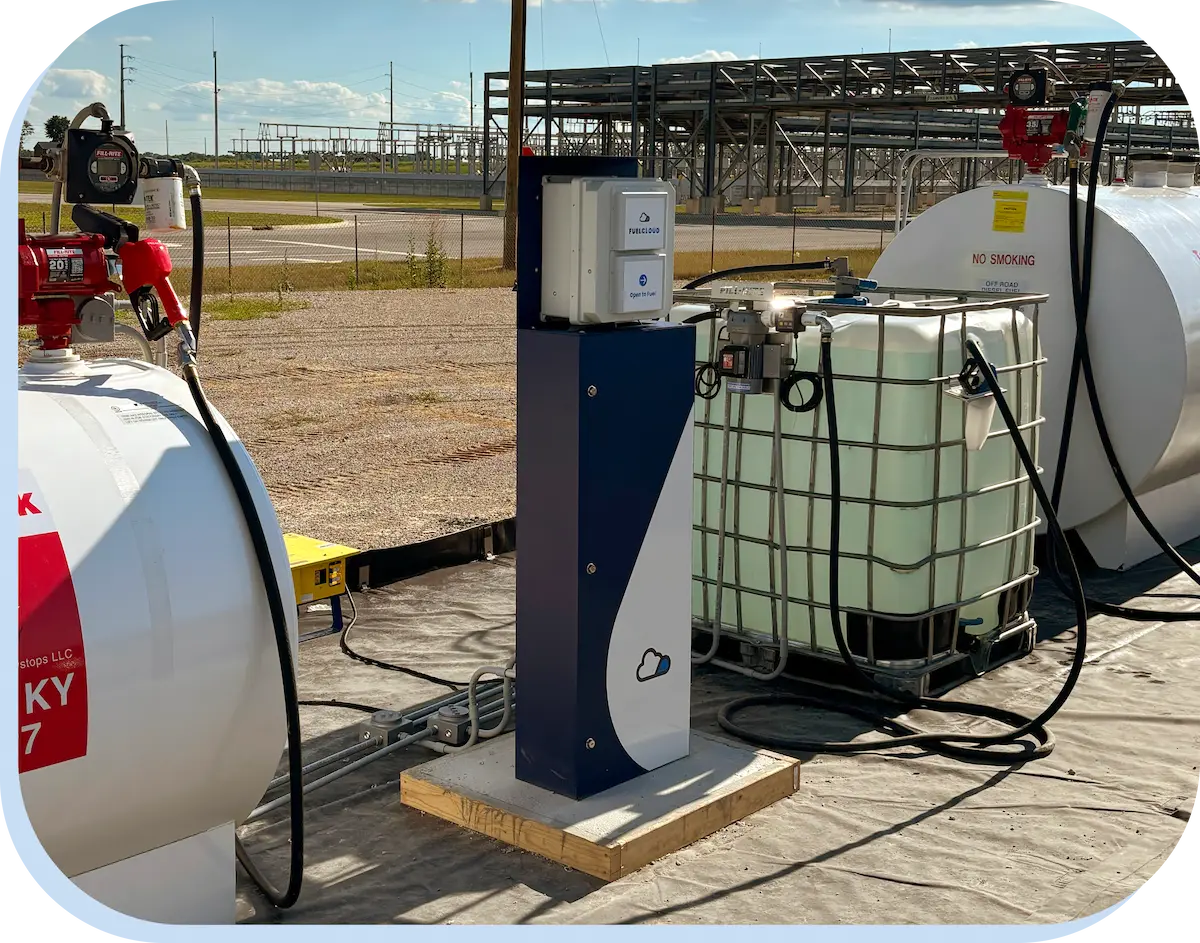
Data center construction is booming, and these projects don't look like an ordinary job site. A single project can have dozens of contractors sharing the same tanks for months at a time, often in remote locations where traditional monitoring (and reliable cell service) is limited. When the fuel bill arrives, the company carrying that cost has to work out who used what to sub-bill appropriately - anything unaccounted for is a cost they have to eat.
FuelCloud is currently supporting fuel programs at more than a dozen megasites, tracking millions of gallons of fuel a month for those projects. Here's what we've learned about what these sites need, and how FuelCloud delivers it.
At the most basic level, the challenge with megasites is scale. On a typical site, it's possible - albeit difficult -for manual processes to keep up with the amount of equipment and volume of fuel used. But when dozens of contractors are drawing fuel for several different parts of the job at the same time from the same tanks, the logistical oversight required to accurately track and manage fuel access is too much to manage by hand.
Every company wants to run a good fuel program that keeps the project moving and recoups the right costs. The right fuel management system is one that supports project managers and lets them handle the enormous volume of transactions (and fuel!) that are changing hands. And with the huge volumes of fuel that a megasite can run through, little errors can add up quickly to major costs.
The starting point for good fuel management is setting limits on the 'who', 'when', and 'how much' of bulk fueling. FuelCloud applies those rules at the tank, so they hold no matter who or when they pull up to the tank.
Every transaction is verified at the nozzle with a PIN, barcode or QR scan, with optional two-factor authentication. That proves the right person fueled the right asset for the right company. And when configured to connect over satellite internet, FuelCloud can report every transaction in real time, even on remote sites without cell service.
Once an authorized driver has filled up, that transaction needs to be allocated to the right contractor and stored for when the bill comes due. FuelCloud gives you the tools to create the reports that break out fuel use out company, asset, driver, vehicle, or any other data category you can imagine. Our API can also send transactions straight into your ERP or accounting software, so allocating fuel costs can skip the spreadsheet entirely.
The result is fuel data that holds up when a contractor asks where a charge came from.
Megasites projects can't afford downtime to install and configure equipment. FuelCloud is compatible with almost every tank setup imaginable, so it can be installed quickly on whatever is already on site. That includes integrating tank monitors for real-time inventory readings, so you can be sure that a tank won't run dry and stall a crew.
And if things do go wrong, our technical know-how helps get you back up to speed ASAP. We've been able to quickly replace other fuel management systems that weren't up to the task and help out with configuration to minimize downtime and help crews get back to work.
If you already use FuelCloud at your yard or shop, the same account can run your job sites. You manage the site's tanks, drivers, vehicles and reports in the same place you already manage the rest of your fuel.
If you're a fuel provider delivering to data center builds, your customers will ask how they should run the fuel program. FuelCloud gives you an answer, and a way to keep supplying the site with confidence.
Before the first tank drops on your next megasite, make sure your fuel program can answer yes to these:
Running fuel on a megasite, or delivering to one? Learn more about how FuelCloud helps run megasite fuel programs, or book a demo with our team before the first tank drop.